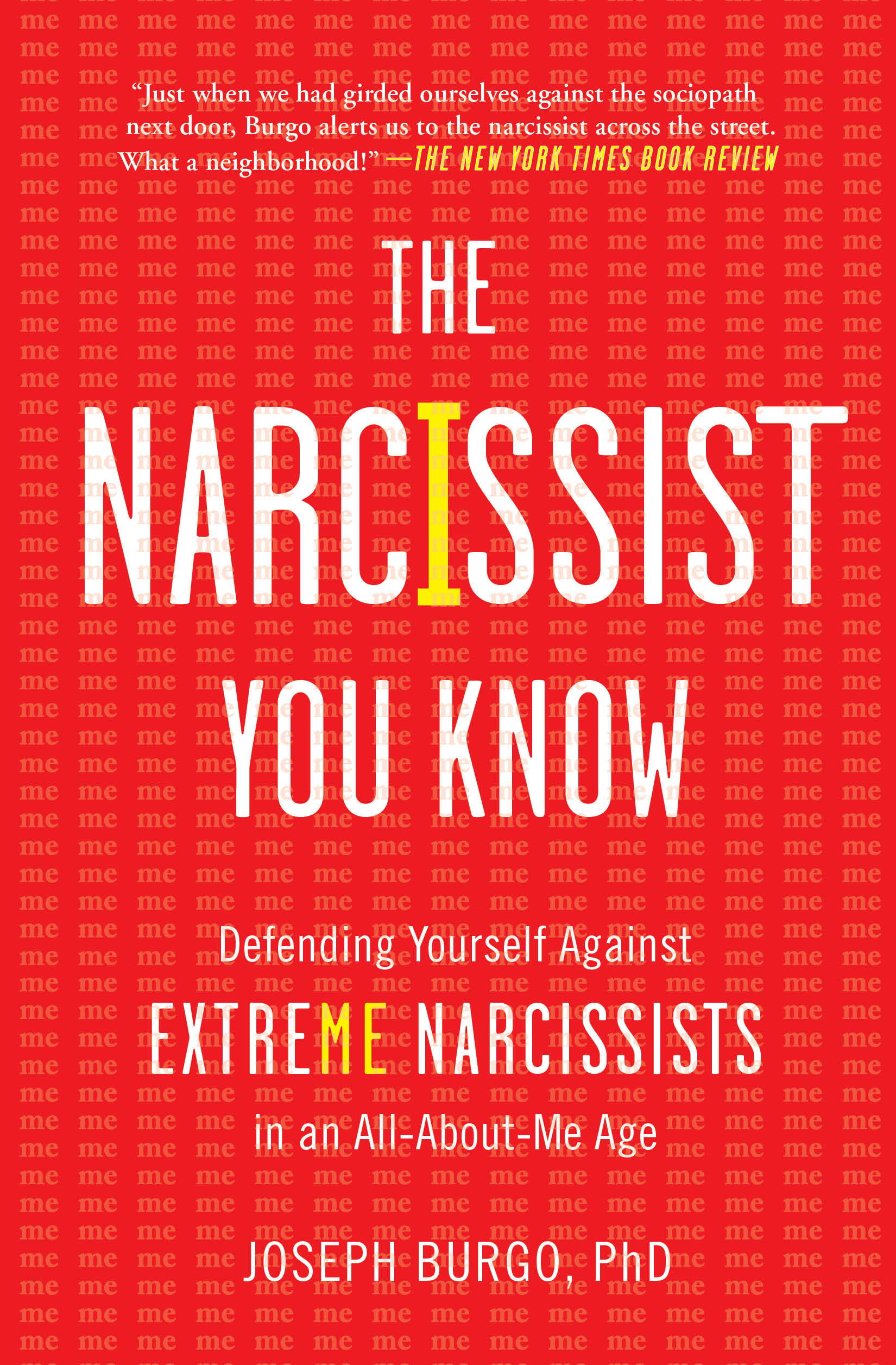

The Narcissist You Know
3 stars
"It helps to know that all of the Extreme Narcissists you'll meet in the pages ahead are trying to feel good about themselves, to prove that they have value, but they often do so in ways that make it difficult to feel any compassion for them. Usually, we can't see what drives their behavior, in particular the unconscious shame that shapes their personalities. The Extreme Narcissist is in flight from himself, and most of what he says and does is an effort to disprove what he unconsciously fears is true—that he is small, defective, and without value."
"Shifting blame is one of the most common strategies for evading the pain of narcissistic injury."
"You may have known someone like Shiloh who, despite innate gifts and supportive parents, can't seem to get started in adult life. With the best of intentions, parents like Anne and John …
"It helps to know that all of the Extreme Narcissists you'll meet in the pages ahead are trying to feel good about themselves, to prove that they have value, but they often do so in ways that make it difficult to feel any compassion for them. Usually, we can't see what drives their behavior, in particular the unconscious shame that shapes their personalities. The Extreme Narcissist is in flight from himself, and most of what he says and does is an effort to disprove what he unconsciously fears is true—that he is small, defective, and without value."
"Shifting blame is one of the most common strategies for evading the pain of narcissistic injury."
"You may have known someone like Shiloh who, despite innate gifts and supportive parents, can't seem to get started in adult life. With the best of intentions, parents like Anne and John foster an attitude of entitlement in their children. Often in flight from their own families of origin, they understandably try to give their sons and daughters what they themselves lacked growing up. When driven by core shame, they may also want their children to become winners who will redeem their own lives. In the face of permissive parenting, too much uncritical praise, and ineffective punishments, boys and girls like Shiloh grow up feeling that they are exceptional, not subject to the usual rules, and entitled to the best of everything without having to work for it."
"Our early sessions focused on the core shame, sometimes confused with physical ugliness, that had afflicted lan throughout life. He'd always felt out of synch with his peers, as if there were something a bit 'off' about him. When new friends came over to his home, he felt ashamed of his parents and their obvious dysfunction—the way they would anxiously bicker in front of total strangers or yell at him over nothing. We talked about his deep sense that something had gone wrong in his development, leaving him convinced that he was fundamentally deformed or defective, and his fear that there was something fraudulent about his entire life. He may have had money in the bank, a girlfriend, and two children living in his home, but it all felt fake—the illusion of 'normal.'"
"'Like Jake Sully, the Addicted Narcissist finds the experience of his drug-altered consciousness to be more compelling than 'real life.' While it may not be apparent to those on the outside, the addict often feels quite grandiose while under the influence-a fact frequently discussed by professionals who treat and write about ad-diction. Alcoholics Anonymous 'has long recognized that the alcoholic's grandiosity... and lack of humility are the most important obstacles' to his recovery. For the alcoholic and other addicts, their relation to their drugs embodies a narcissistic defense wherein 'a false self or grandiose self... guards against painful feelings of shame and low self-worth.'"